Chair for Globalisation and Legal Pluralism
The chair’s research deals with globalisation processes in law from a historical perspective. Our research focuses on the complex interactions between different legal systems, understandings and practices, challenging European-centric narratives and examining the dynamics of change.
Our research focuses on the legal transformation processes that challenged many regions outside Europe in the 19th and 20th centuries and that often required a difficult positioning between the expansion of European legal ideas and the struggle for sovereignty and self-assertion. We ask for the effects of colonialism, semi-colonialism and decolonisation on legal understandings and practices and we ask for the role of legal pluralism in multi-ethnic societies. Besides, our research focuses on the circulation of ideas and practices in the context of National Socialism and fascism, and we examine legal responses to mass atrocities and crimes against humanity.
With these topics, our research contributes to the debates on the plurality and diversity of legal orders in a globally interconnected world and bridges the gap between historical and current challenges.
Research areas
Globalisation of law

This research focus is dedicated to the often-asymmetrical encounter between different legal orders in an increasingly globalised world. It examines translation and appropriation practices as well as dissent and resistance and asks how dynamics of change are initiated through the complex interaction of law, institutions, ideas and actors.
Contemporary Legal History
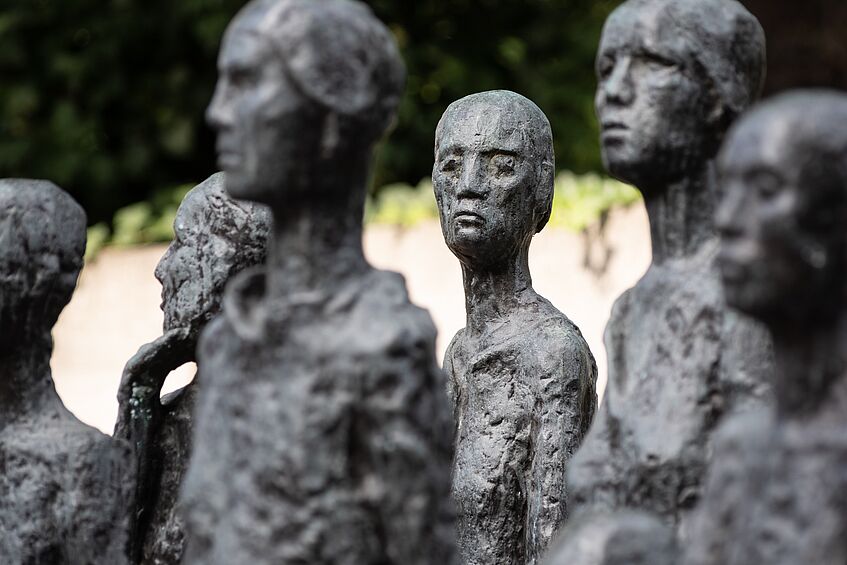
The focus area Contemporary Legal History is particularly devoted to National Socialism and its aftermath. We are interested in transnational comparative perspectives, as well as in the conditions that have led to the complicity of jurists in injustice and lawlessness.
Transitional Justice (TJ)

In this field, we examine legal and societal processes of coming to terms with serious human rights violations. Our research approach explores the interactions between global developments and local practices of TJ, critically questioning standardized models from an interdisciplinary perspective.
Research projects
In the 19th and early 20th century, Japan, China and the Ottoman Empire faced massive pressure to adapt their legal systems to Western standards. The project examined the transformation processes initiated by the translation of Western law and developed approaches to legal historiography that reflect the complex dynamics of change and the global connections involved.

The project comparatively examines how legal scholarship in Germany and Japan positioned itself under authoritarian regimes between 1930 and 1955 and contributed to the ideological transformation of law. It also analyzes the role of legal scholarship in the democratic transition after 1945.